
Insperium Chinese
DuChinese Alternatives: Other Ways to Read Graded Chinese
Updated October 5, 2026 · 4 min read

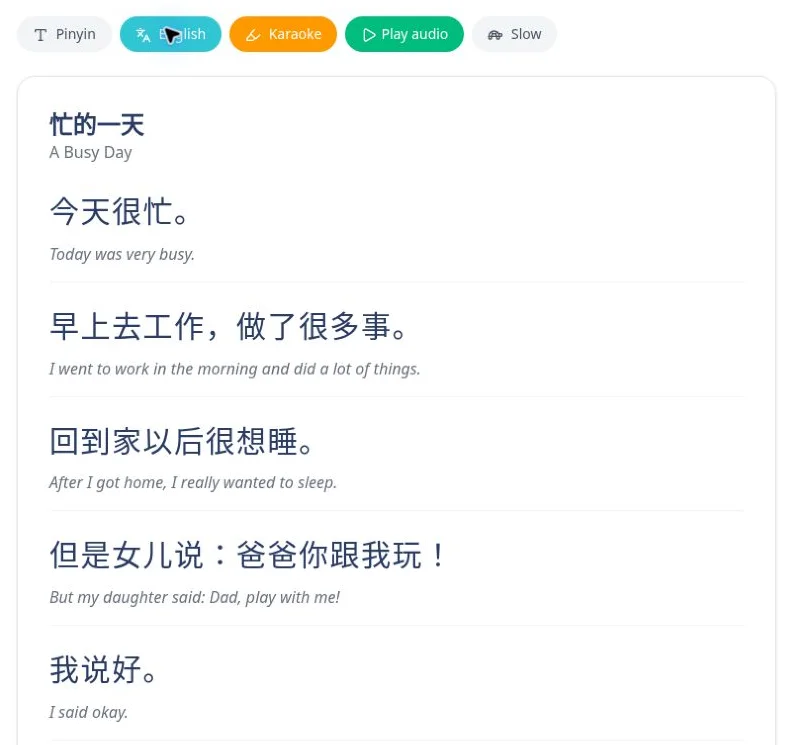
If you are looking for a DuChinese alternative, the honest starting point is that DuChinese is a good app: polished graded stories, clean audio, and a comfortable reader. People rarely leave because it is bad. They leave because they want something it is not built to be — longer books, a different kind of text, or a system that makes the characters stick. So the right alternative depends on what you are missing. Below are the main kinds of tools learners move to, what each is good at, and where Insperium fits — including where it does not.
Why people look for an alternative
In our experience, it is almost always one of three reasons:
- You want to finish a book. Short stories are perfect at the start. At some point you want to follow characters across chapters and close the back cover of a whole book in Chinese.
- You want different texts. News, culture, real-world topics — reading about the world rather than about a fictional family's weekend.
- Reading is not making the characters stick. You look a character up, nod, and forget it by Thursday. Many learners end up running a separate flashcard app next to their reading app, by hand.
Each of those points to a different kind of tool.
The main alternatives, by what they do
Graded news: The Chairman's Bao
If you want to read about the real world, The Chairman's Bao rewrites news articles at HSK levels, from beginner up. It is a good fit if fiction does not hold your attention and you want current-affairs vocabulary. Articles are short by nature, so it will not give you the experience of reading a book.
Graded books: Mandarin Companion and other series
For book-length reading, graded reader series such as Mandarin Companion adapt well-known novels into Chinese at a fixed vocabulary level, in print and as e-books. This is the closest thing to "real reading" at a beginner level, and finishing one is a genuine milestone. The trade-off of most series: each title exists at one level, so when you grow, you move on to a different book.
A reader inside your dictionary: Pleco
Pleco is the dictionary most Chinese learners already have, and it offers a reader with tap-to-look-up plus graded e-books you can add. If you already live in Pleco, keeping your reading there is convenient, and its flashcard add-on can hold the words you look up. It is a toolbox rather than a course: you choose the material and set up the routine yourself.
Your own material: LingQ
LingQ lets you import almost any Chinese text and tracks which words you already know as you read. That makes it strongest once you can handle native material; at beginner level, ungraded text tends to be more decoding than reading.
Characters first, then books: Insperium
Insperium starts from the third reason — reading that does not stick — and from the fact that Chinese reading is gated by characters. Our main course, Character Mastery, teaches the 2,500 most common characters in frequency order, drilled in sets of look-alikes, with meanings in your own language (English, Dutch, German, Spanish, French or Italian) and a spaced-repetition schedule from 6 hours to 30 days. Members also read every graded story and dialog we have checked by hand, across 18 everyday topics.
The other half is books: 33 world and Chinese classics, each rewritten at all six CEFR levels from A1 to C1, so you can reread the same story one level up instead of starting a new one. They are in their final edit and open soon, sold separately from the membership.
Where Insperium is not the right pick, honestly: if you want a large library of short stories today, the established story apps have far more than our hand-checked set, and we will not pretend otherwise.
A quick comparison
| Format | Best for | |
|---|---|---|
| DuChinese | Graded short stories, app | Daily short reading with audio |
| The Chairman's Bao | Graded news articles, app and web | Real-world topics and news vocabulary |
| Mandarin Companion and similar series | Graded novels, print and e-book | Finishing a whole book at one level |
| Pleco | Dictionary with reader and add-on e-books | Learners who already live in Pleco |
| LingQ | Import-your-own texts | Upper-intermediate learners reading native material |
| Insperium | Character course + hand-checked stories; six-level books opening soon | Making the characters stick, then rereading classics level by level |
Prices change, so check each site for the current ones; most of these run on a subscription, and printed graded readers are one-off purchases.
Whatever you pick: make reading and review one routine
The tool matters less than the loop around it. The learners who keep going do some version of this:
1 Choose a text at your level
A short story or a chapter you can comfortably follow — two or three unknown words per hundred, not ten.
2 Read with support
Check unfamiliar words without losing the thread of the story.
3 Practise what you met
Review a few useful words or characters from the text on a spaced schedule.
4 Return to the text
Reread it and notice which words now feel familiar.
Which should you pick?
- Stay with DuChinese if short daily stories are exactly what you want and your vocabulary is sticking.
- Try graded news if fiction does not hold you.
- Try a graded book series if you want the feeling of finishing a book.
- Try Insperium if the characters are what keeps slipping away, and you want classics you can reread at every level as you grow.
- Combine them if you read a lot. Short stories for daily volume and a book as your main project is a perfectly good diet. More comprehensible input is rarely the wrong answer.
Try before you decide
Don't take a comparison post's word for it, including ours. Most of these tools let you try something free. On Insperium, a set of sample stories and dialogs opens without an account, and Character Mastery is $1 for the first seven days, then $29/month — cancel any time from your settings. Twenty minutes with each option will tell you more than any table.